
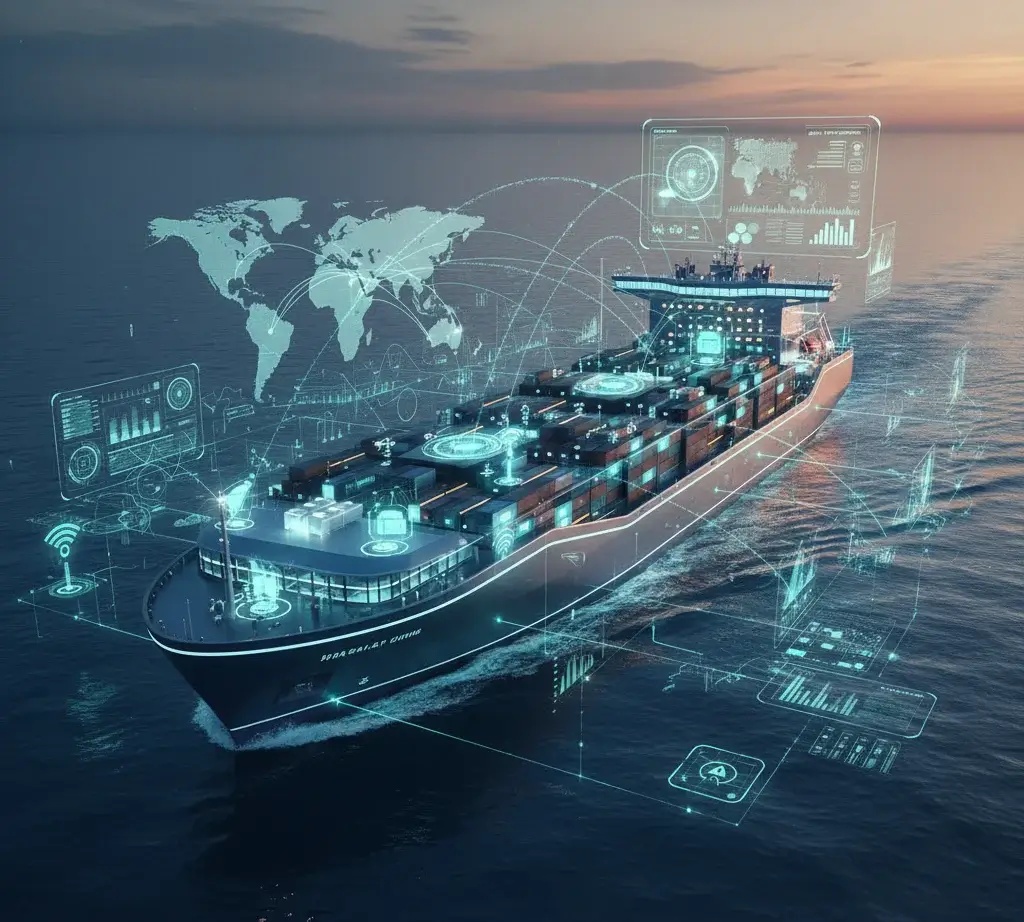
The maritime industry is undergoing rapid digital transformation. From onboard IoT sensors to cloud-based analytics and AI-powered decision systems, digitalization is reshaping every phase of ship operations. Digital twins enable virtual replicas of vessels that simulate performance, predict maintenance needs, and optimize voyage planning.
Key Technologies Driving Smart Shipping
- IoT sensor networks aboard vessels provide real-time data on engine performance, hull condition, and fuel usage.
- AI algorithms analyze large datasets to predict component failures and schedule preventive maintenance, reducing unexpected downtime.
- Digital twin platforms allow shore-based and onboard teams to simulate operations, tweak settings, and plan routes for maximum efficiency.
Challenges and Industry Outlook
Despite the promise, barriers such as cybersecurity threats, legacy systems, and integration costs remain significant. Companies must invest in secure networks, workforce training, and change management to fully leverage smart shipping initiatives.
Looking ahead, the industry is steering toward autonomous vessels, blockchain-based logistics, and seamless digital ecosystems — a future where fleet operations are smarter, safer, and more sustainable than ever before.